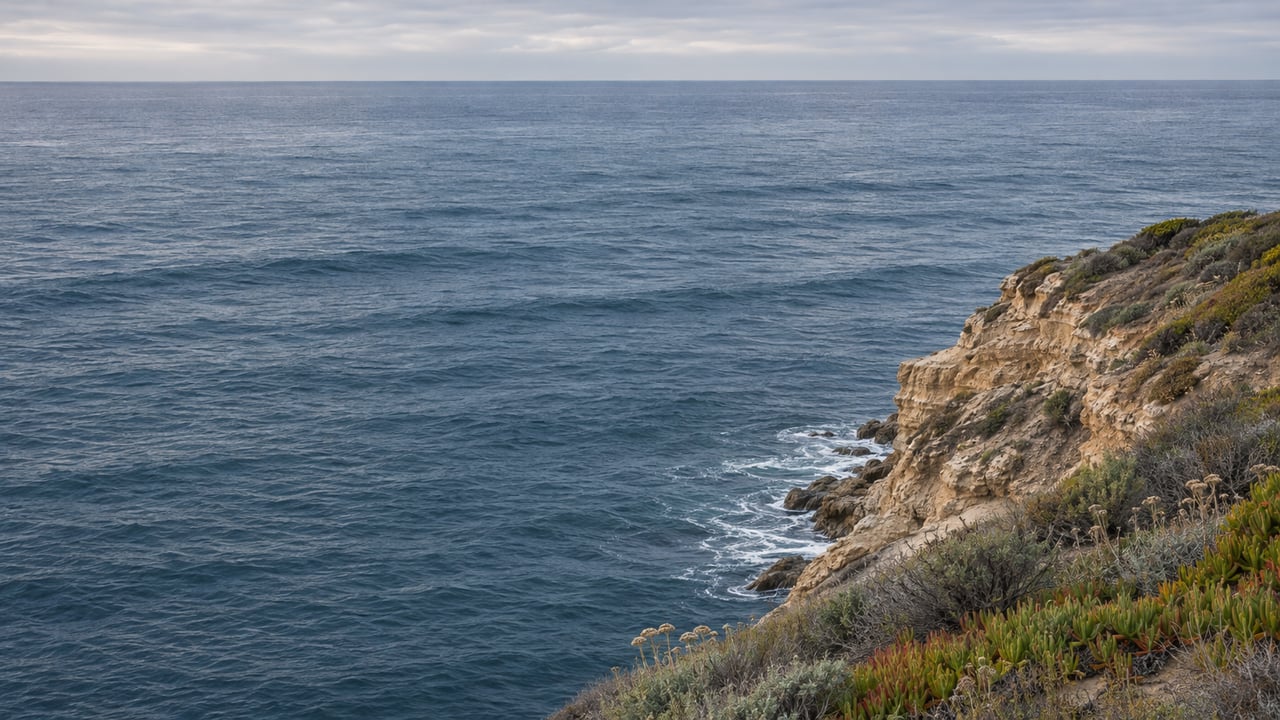
The back patio of the Point Vicente Interpretive Center sits 137 feet above the kelp beds, and from December into late May it's also a research station. Volunteers from the Los Angeles chapter of the American Cetacean Society sit there with binoculars marked with measuring reticles, along with compasses and a few spotting scopes. They log every gray whale they see and record the visibility, weather and sea conditions twice an hour. The project has run from the Palos Verdes Peninsula since 1984. Its season traditionally opens on December 1 and runs during daylight hours through late May, which puts the next opening day less than two weeks away.
That's the date most people circle. For anyone in Rancho Palos Verdes who wants to see a gray whale from the bluff this winter, the census's own recent seasons point to two later windows: one week in late January, and a stretch in mid-March that has outdrawn it.
The bigger national estimate and the view from the patio
The national news on gray whales improved this year. NOAA Fisheries estimates the Eastern North Pacific population at 15,930 to 20,530 whales for the 2025-26 migration, up from 11,700 to 14,200 in 2024-25. On the same page, the agency says the jump is larger than births and deaths can explain. It names possible causes, including whales changing their migration routes, so that different numbers pass the survey site in some years, along with factors inside the survey itself. Calf production hasn't recovered either. NOAA's latest calf estimate is 85 for 2025, the lowest since its calf records began in 1994.
Route changes matter on the Peninsula because of where the census post sits. The ACS-LA team tracks the nearshore whales, and the chapter notes that most gray whales take offshore routes past Palos Verdes. A higher coastwide estimate tells you little about how many whales will pass close enough to Point Vicente to see from the railing. The bluff's own tallies are a better guide to that.
What recent seasons looked like from Point Vicente
| Season | Southbound grays | Southbound calves | Northbound grays | Northbound calves | Southbound peak week |
|---|---|---|---|---|---|
| 2023-24 | 225 | 22 | 579 | 34 | January 19-24, 68 whales |
| 2024-25 | 130 | 0 | 485 | 8 | January 25-31, 28 whales |
The 2024-25 season ran 173 days, from December 1, 2024 to May 25, 2025. It set new record lows for both southbound and northbound totals, and it was the first season the census recorded no southbound newborn calves. In earlier seasons, the southbound count ranged from 293 to 1,902 whales and the northbound count from 521 to 3,412.
Last winter, the 42nd season, was a little better. Census director Alisa Schulman-Janiger told Spectrum News that sightings improved slightly over the previous season but were still "really low." She compared it with earlier decades: "When you think of the good old days, I could see 80, 90, 100 gray whales a day. 152 was our highest on one day. I think this year we had 30 on one day." The same report said Island Packers, which runs boat trips out of Ventura, saw roughly 20% fewer gray whales that season.
In both of the full seasons in the table, the northbound total was far larger than the southbound one, and the timing of each run follows from that.
December on the bluff
The census described 2024-25 as another late southbound migration, possibly because the whales stayed longer in their northern feeding areas. On 50 of that season's 173 days, the team saw no gray whales at all, and many of those empty days had excellent sighting conditions.
On those days the team's species list kept growing. Over the 2024-25 season, the census recorded blue, fin, humpback, minke and sperm whales. It also logged common dolphins, coastal and offshore bottlenose dolphins, Pacific white-sided dolphins and Risso's dolphins, plus California sea lions, harbor seals and an elephant seal. The 2023-24 list added false killer whales and killer whales. A visit to the patio in December, before the southbound peak, is still a chance to see some of those species and to meet the people doing the counting.
Late January is the southbound week to plan for
The southbound migration has peaked in January in both recent seasons, a few days later the second time. In 2023-24 the peak week was January 19 to 24, with 68 southbound grays. In 2024-25 it was January 25 to 31, when the team counted 28. The best single day that season was January 27, with 11 southbound whales, a new record low for a peak day.
If you can only free up one winter weekday afternoon for Point Vicente, the last full week of January has the best southbound record of the past two seasons. In those seasons it wasn't the best week of the whole year, though.
After the turnaround, the bigger numbers
The census marks a turnaround date, when traffic shifts from mostly southbound to mostly northbound. It fell on February 21 in both 2023-24 and 2024-25. The weeks around it can be thin. In 2024-25 the crossover was brief, with few whales moving in either direction.
Then the northbound run arrives. In 2024-25, the peak northbound week was March 15 to 21, with 96 gray whales, and the best northbound day was March 15, with 21. That peak week came two weeks later than the one before. In 2023-24, the peak northbound week brought 154 whales. Compare that with 28 whales in the southbound peak week of the same season. In 2024-25 the March week had more than three times as many whales as the late-January one.
Calves come mostly on the northbound leg. In 2024-25, all eight calves the census logged were heading north. The count also stays open after the main pulse. The team saw seven northbound grays in the last four days of the 2024-25 season, and Schulman-Janiger wrote that those late whales may have come from the Gulf of California, where many grays were seen that year.
For a resident planning around school breaks or out-of-town guests, the past two seasons suggest this: treat December as a chance to see whatever else is passing, aim for the last week of January if you want to see whales heading south, and hold mid-March as the most likely week to see the most gray whales from this bluff.
Visiting the patio, or joining the count
The City of Rancho Palos Verdes lists the Point Vicente Interpretive Center museum and gift shop as open daily from 10 a.m. to 5 p.m. The park grounds are open from dawn to dusk, parking is on site, and museum admission is by donation. The city's facility page is the place to check before you go. The census team works from the back patio, so the museum's hours matter less than daylight for anyone who wants to see the count in progress.
Residents who want to do more than visit can volunteer. The ACS-LA census page says to contact the census director to get involved. The chapter says no experience is needed, and it has trained new volunteers on site in December. The 2024-25 season ran on 100 volunteers who logged 8,767 hours between them. Twelve core counters each gave more than 200 hours.
If whale season is part of why you love this stretch of coast, we'd be glad to talk about the parts of Rancho Palos Verdes where the Point Vicente bluff is a short drive away. Reach out to Dreams Worth Living and we'll tell you what we know about life near the water here. You can also read more about the area on our Rancho Palos Verdes neighborhood page.