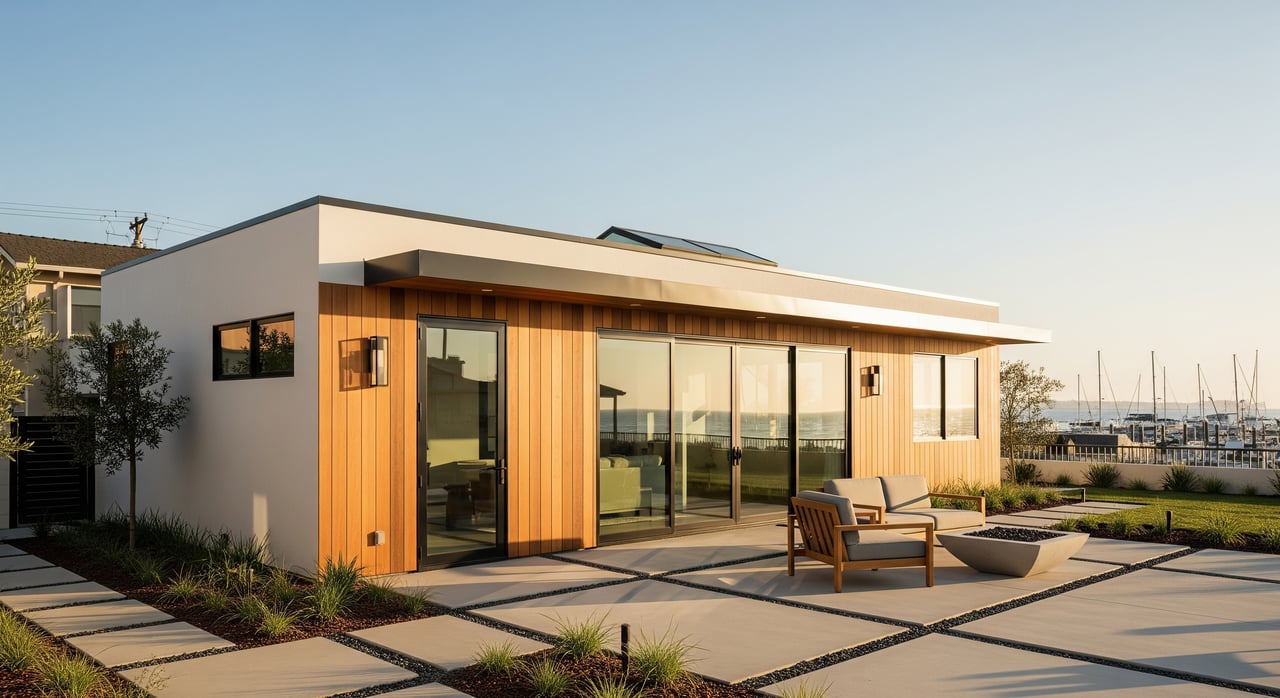
Thinking about turning your garage into a rental or adding a backyard cottage? In Redondo Beach, an accessory dwelling unit can help you house family, generate income, or boost resale appeal. The path is clearer than you might think, but details matter. In this guide, you’ll learn the rules that apply locally, what it costs, how long it takes, and a simple way to estimate ROI so you can plan with confidence. Let’s dive in.
What counts as an ADU in Redondo Beach
California law sets the baseline for ADUs across the state, and Redondo Beach follows those rules while adding local process details. You’ll typically see four types:
- Junior ADU (JADU). A small unit created within the existing home. The state caps JADUs at 500 sq ft.
- Conversion ADU. A unit created from existing space like a permitted garage or a portion of the home.
- Attached ADU. A new addition connected to the main house.
- Detached ADU. A stand-alone backyard cottage.
Many ADUs that meet objective standards are processed ministerially, which means no public hearing. Local zoning, setbacks, height, and lot coverage still apply, so plan to confirm details with the Redondo Beach Planning Division before you design.
Key rules you need to know
Size and placement basics
State law sets broad size allowances, and many cities allow detached ADUs up to about 1,200 sq ft. Your exact maximum depends on zoning, setbacks, height, and lot coverage on your parcel. JADUs remain limited to 500 sq ft. Because Redondo Beach is a coastal city with varied lot types, get the current checklist and talk with Planning staff about your zone and any overlays that affect placement.
Parking and owner occupancy
State rules limit when cities can require parking for ADUs. In many cases, parking is waived, such as when the property is near public transit, when you convert existing parking, or for JADUs. Owner-occupancy rules have been scaled back by state law, so you generally are not required to live on-site to rent the ADU. Always confirm parking specifics with the city for your address.
Fees and utilities
Permit and plan-check fees vary by project. State law limits some impact fees for smaller ADUs, but you should still budget for permits, inspections, and possible utility charges. Utility connections, sewer laterals, and meter work can add significant cost, especially for detached units. Ask about any fee reductions or deferrals for smaller ADUs.
Coastal and historic considerations
Parts of Redondo Beach sit within the coastal zone. Near the shoreline, additional coastal or local permits may apply. If your home is in a historic district or has design protections, exterior changes may require special review. Check early to avoid surprises.
Short-term rental rules
If you plan to use an ADU for short-term stays, verify Redondo Beach’s current short-term rental regulations and any registration or tax requirements. Many coastal cities limit or prohibit short-term rentals. Do not rely on STR income without confirming the rules.
What it costs to build an ADU
ADU budgets vary with type, size, finishes, and site complexity. Recent Southern California ranges provide helpful ballparks:
- Conversion or JADU: typically from the low tens of thousands up to about $100k–$150k depending on upgrades and finishes.
- Attached ADU: often $150k–$350k.
- Detached ADU: commonly $150k on the low end to $400k–$600k+ for larger or higher-end cottages in coastal markets.
For new detached construction, many owners see $250–$500+ per sq ft. Conversions often cost less per square foot because you’re reusing structure.
Soft costs, site work, and permitting
Your budget should include more than just construction:
- Design and engineering: architect or drafting, structural engineering if needed, surveys.
- Permits and fees: plan check, building permits, and possible impact fees.
- Site work: grading, drainage, retaining walls, trenching, demolition of old garage components, and landscaping repairs.
- Utilities: sewer lateral upgrades, water or electrical work, and possible new meters.
Include a 10–20% contingency for unknowns, especially with older structures.
Ways to manage cost
- Start with a conversion or JADU if your layout allows it.
- Keep the floor plan compact and efficient.
- Choose durable mid-tier finishes that reduce maintenance.
- Use professionals who know Redondo Beach plan check requirements to minimize delays and redesigns.
Timeline: plan to keys
The ADU journey has predictable phases, but timing varies with scope and corrections during plan check:
- Pre-design and feasibility: 2–6 weeks to confirm zoning, setbacks, and coastal or utility constraints.
- Design and engineering: 4–12+ weeks based on complexity.
- Plan check and permits: 4–12 weeks for review and corrections with ministerial processing when standards are met.
- Construction: 2–6 months for conversions; 6–12+ months for detached ADUs depending on size and site conditions.
Plan on 6–18 months from first conversation to move-in. Complex sites and discretionary reviews can extend the timeline.
ROI: will an ADU pay off?
You can evaluate returns two ways: cash flow from rent and the potential value add at resale. Redondo Beach’s strong rental demand and high home values can support attractive income, but construction and financing costs are also higher. Run numbers conservatively.
Build a quick cash flow model
Use this simple framework to estimate annual performance:
- Gross rent. Estimate long-term monthly rent for a comparable 1-bed unit in your area. Multiply by 12.
- Vacancy. Apply a vacancy factor, such as 5–10 percent.
- Operating costs. Include property management if you use it (often 10–12 percent of collected rent), insurance increases, maintenance, utilities you cover, and a reserve for repairs.
- Net operating income (NOI). Gross rent minus vacancy and operating costs.
- Project cost. Sum construction, soft costs, utilities, permits, and contingency.
- Net yield. Divide NOI by total project cost to gauge the unlevered return.
- Cash flow. Subtract annual debt service if you finance the build to see leveraged cash flow.
This method lets you compare a conversion versus a detached ADU using the same assumptions. You can also test different rents and costs to see your breakeven point.
Value at resale
ADUs can increase buyer appeal for multigenerational living or rental income. The dollar-for-dollar increase varies by market and buyer demand. In competitive South Bay neighborhoods, the added flexibility often helps your listing stand out even if the exact premium is hard to quantify.
Short-term rentals and ROI
Short-term rentals can show higher nightly rates but come with higher operating costs and tighter rules. Always confirm whether STR use is allowed for your ADU in Redondo Beach before counting on those revenues.
Financing, taxes, and insurance
You have several ways to fund an ADU:
- Cash or savings.
- Home equity line of credit or home equity loan.
- Construction loan that converts to permanent financing, including some ADU-focused options.
- Refinance programs through conventional lenders; policies vary, so compare terms.
For taxes, rental income is taxable, while many operating costs and depreciation are deductible. Adding an ADU can affect assessed value over time, which may increase property taxes. Speak with a CPA about your specific situation.
On insurance, notify your carrier before construction. You may need a landlord policy or endorsements for the new structure and added liability. If you plan to rent the unit, require your tenant to carry renters insurance.
Pitfalls to avoid
- Underestimating utility and site-work costs like sewer laterals, trenching, or meter upgrades.
- Assuming short-term rental income without confirming city rules.
- Submitting incomplete plans that trigger multiple correction cycles.
- Skipping a 10–20 percent contingency for surprises.
- Relying only on generic per-square-foot estimates instead of getting local contractor bids.
Step-by-step plan for Redondo Beach
- Feasibility. Contact the Redondo Beach Planning Division for the current ADU checklist, zoning confirmation, setbacks, maximum size, and any coastal or historic constraints.
- Market research. Gather recent local rental comps for similar 1-bed units. If you plan to rent, ask property managers about expected vacancy and management fees.
- Budgeting. Obtain 2–3 conceptual estimates from experienced contractors. Compare a conversion, an attached option, and a detached plan to see which meets your goals and budget.
- Design. Hire a designer or architect familiar with Redondo Beach submittals. Keep the plan efficient to control costs.
- Permitting. Submit a complete plan set and required forms. Ask about any expedited review options.
- Financing. Explore HELOCs, construction loans, or refinance paths early to align funding with your construction timeline.
- Rental strategy. Decide on long-term or short-term use and confirm local STR rules. Build a conservative cash flow model that includes vacancy, insurance, utilities, maintenance, and reserves.
- Professional team. Line up an architect, contractor with Redondo Beach experience, and a CPA for tax planning. Consider a property manager if you do not want to self-manage.
Buying or selling with an ADU in Redondo Beach
If you are buying, confirm that any existing ADU was permitted, meets building code, and is recognized by the city. Review utility setup, separate entrances, and any rental history. Ask about coastal permits if the property is near the shoreline.
If you are selling, highlight flexible living options and provide documentation: approved plans, permits, final inspections, and any rental records. Clear paperwork gives buyers confidence and can support your pricing.
Ready to talk through feasibility, local comps, and trusted resources? Reach out to Justin Drury for calm, concierge guidance tailored to your South Bay goals.
FAQs
How big an ADU can I build in Redondo Beach?
- State rules allow generous sizes, and many cities permit detached ADUs up to about 1,200 sq ft; your exact maximum depends on zoning, setbacks, height, and lot coverage, so confirm with Redondo Beach Planning.
What is a JADU and how is it different?
- A Junior ADU is created within the existing home and is capped at 500 sq ft; it is typically cheaper and faster than a full detached ADU because it often reuses space and infrastructure.
How much does an ADU cost locally right now?
- Recent Southern California ballparks: conversions around the low tens of thousands to $100k–$150k, attached ADUs at $150k–$350k, and detached ADUs at $150k–$400k–$600k+ depending on size, finishes, and site work.
How long does permitting and construction take?
- Plan for 6–18 months from feasibility to completion: several weeks each for design and plan check, 2–6 months for conversions, and 6–12+ months for detached builds.
Will an ADU raise my property taxes?
- Adding an ADU can increase assessed value, which can raise property taxes over time; speak with the local assessor or a CPA for specifics on your situation.
Can I use my ADU for short-term rentals?
- Short-term rental rules are city-specific and can be restrictive in coastal areas; verify Redondo Beach’s current STR regulations and any registration or tax requirements before planning on STR income.
Do I need new parking for an ADU?
- State law limits parking requirements for ADUs, with waivers in many cases such as proximity to transit, JADUs, or conversions; confirm the standard that applies to your property with the city.
What financing options are common for ADUs?
- Owners often use cash, HELOCs, home equity loans, or construction loans that convert to permanent financing; compare lender policies and timelines early in the process.